Playwriting Program
Students explore storytelling by creating original scripts, developing characters, and building dialogue. They learn essential writing and communication skills such as sequencing events, using descriptive language, and expressing ideas clearly. Can be based off of whole original work or based off of in classroom texts. Students work collaboratively to bring their stories to life in a short staged reading.

This program aligns with North Carolina Grades 1–3 ELA standards, including:
- Writing: W.1–3.3 – Write narratives with a clear sequence of events and descriptive details.
- Speaking and Listening: SL.1–3.1 – Participate in collaborative conversations and share ideas effectively.
- Language: L.1–3.1 – Use grammar, capitalization, and punctuation correctly in written work.
- Reading Comprehension: RL.1–3.3 – Describe characters, settings, and major events in a story.
Through this program, students strengthen their writing, speaking, listening, and comprehension skills while fostering creativity, teamwork, and a love of storytelling.
Put On a Play in a Week
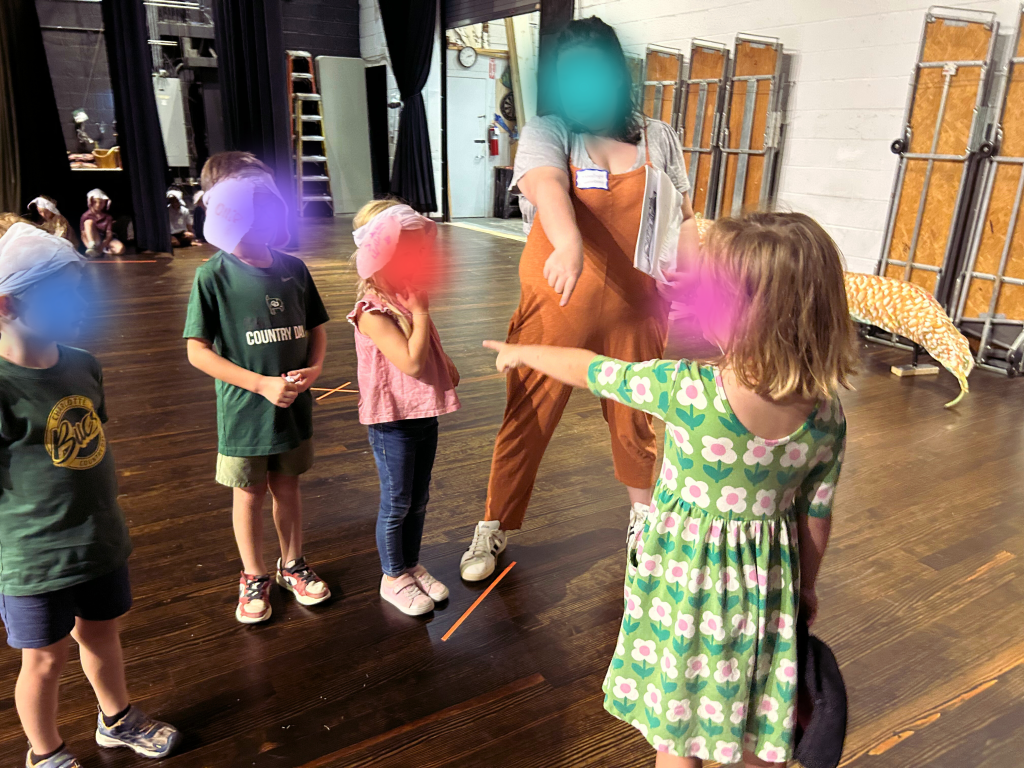
Students explore classic stories such as The Wizard of Oz or their own classroom text while learning performance skills like memorization, projection, and collaboration. They work together to stage a 30-minute play.
ELA Alignment (Grades 1–3):
- RL.1.2 / RL.2.2 / RL.3.2: Retell stories, including key details; demonstrate understanding of central message.
- RL.1.3 / RL.2.3 / RL.3.3: Describe characters, settings, and events using key details.
- SL.1.4 / SL.2.4 / SL.3.4: Tell a story or recount an experience with appropriate facts and details.
- SL.1.6 / SL.2.6 / SL.3.6: Produce complete sentences when speaking during rehearsals and performances.
Costume and Prop Challenge
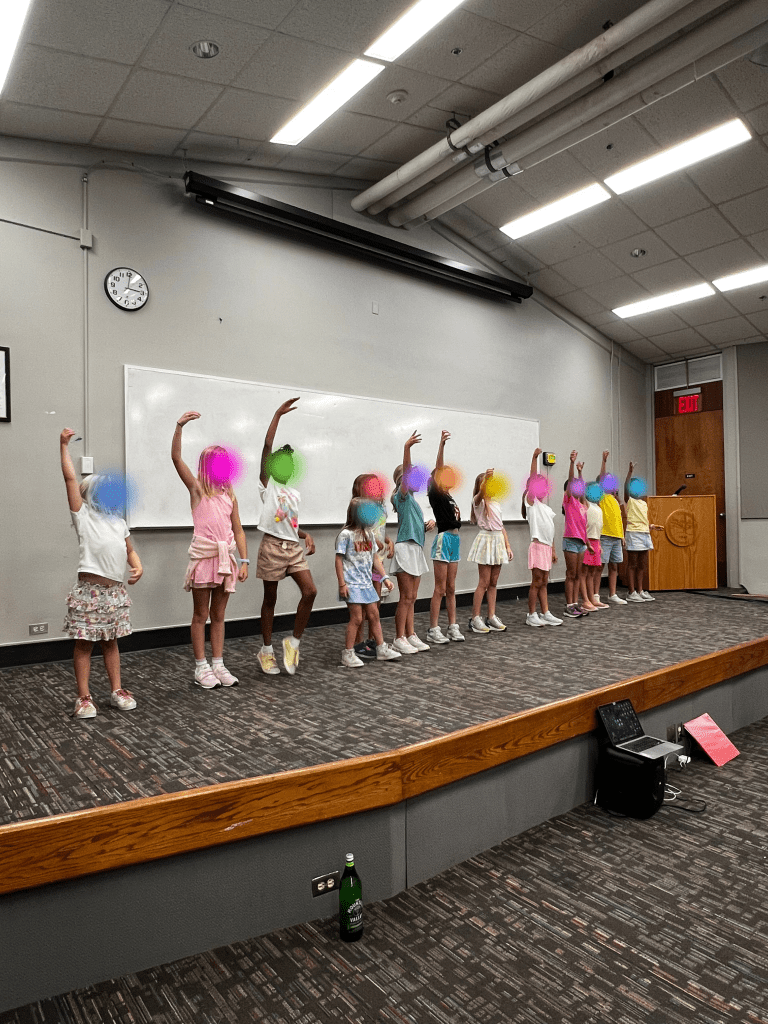
Students design masks, props, and costumes for characters, showcasing them at the end of the residency while narrating their creative process.
ELA Alignment (Grades 1–3):
- W.1.3 / W.2.3 / W.3.3: Write narratives describing events with details and sequencing (ex: journaling or describing design choices).
- SL.1.4 / SL.2.4 / SL.3.4: Describe people, places, things, and events with relevant details.
- L.1.1 / L.2.1 / L.3.1: Demonstrate command of conventions of standard English grammar and usage when speaking.
- SL.1.2 / SL.2.2 / SL.3.2: Ask and answer questions about key details (discussing character traits, costume symbolism).
 ArtVentures Camps